
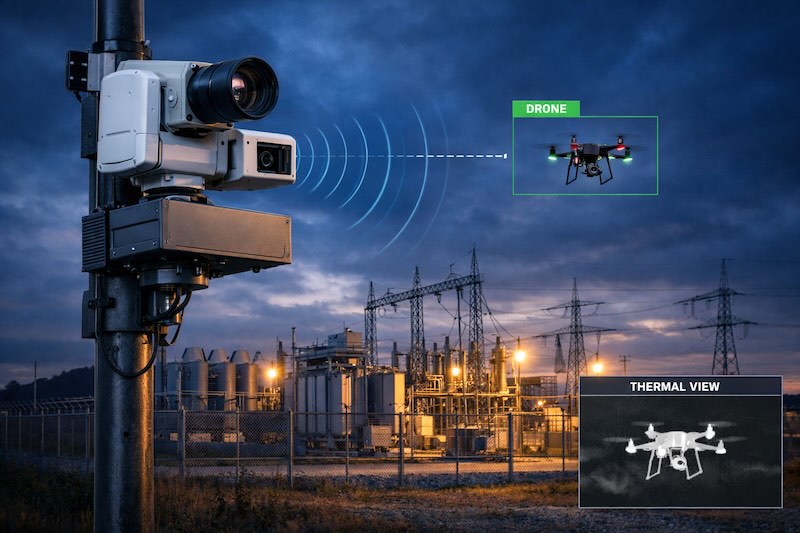
Concern about drone defense is growing. Image was created using OpenAI’s ChatGPT.
As unauthorized drone activity around critical infrastructure becomes increasingly common, trusted authorities and regulatory bodies are advising facility operators to update existing safety systems and explore specialized anti-drone security measures.
Critical infrastructure like energy grids, oil and gas pipelines and transit stations have long stood as primary targets for physical and cybersecurity attacks, but as global socioeconomic tensions rise, the frequency and sophistication of attacks against critical sites are increasing.
Amidst a 30% rise in cyber-attacks, many of which are designed to impact or disable physical Operational Technology (OT) systems, government agencies and trusted authorities around the world are publishing updated guidance intended to help operators address novel threats.
One such example published by the U.S. Cybersecurity and Infrastructure Security Agency (CISA) in late 2025 defines and outlines guidelines for addressing emerging risks posed by drones against critical infrastructure. As drone detection tech becomes an increasingly vital security measure, many operators are exploring practical ways to update defensive systems.
The rising threat of sophisticated drone attacks
In the past, efforts to safeguard critical infrastructure against targeted attacks relied primarily on land and cyber-based security protections. Through site-specific combinations of physical and digital security measures, facility operators could successfully detect, deter and address most common security risks while empowering on-site teams to perform informed responses.
In recent years, however, technological advancements have enabled more malicious actors to circumvent traditional defenses using airborne devices. In the modern age, drone attacks against critical infrastructure are among the most significant threats faced by facility leaders.
Reports published between 2020-2025 suggest that:
- Unauthorized drone activity near U.S. airports has increased by over 25%
- Drone incidents at European airports have increased by as much as 300%
- Drone incidents targeting prisons in the U.K. have increased by over 40%
- Unauthorized drone activity across critical infrastructure has risen by at least 217%
The ability for drones to be used for both surveillance and as a vehicle for physical attacks makes them a valuable tool for sophisticated criminals. To appropriately safeguard critical infrastructure in the modern age, protections must be optimized to combat drone incursions.

The importance of visual drone detection solutions
In practice, facility operators can leverage some traditional security solutions to mitigate the impact of drone-based attacks. However, even the most highly-skilled professionals cannot engage appropriate responses to threats they’re unable to identify and have no way to track.
As drone attacks become more common across critical infrastructure, the adoption of tools and technologies specifically designed to address airborne threats is rising. According to data published in 2025, the global counter-drone market is expected to grow at a CAGR of almost 30% over the next decade to reach a total value of more than $30.5 billion by 2034.
How do visual drone detection solutions work?
Visual drone detection solutions leverage a variety of specialized imaging and analytics tools to accurately detect and classify unauthorized airborne devices at long distances. While such tools can appear similar to the traditional ruggedized security cameras already commonplace at critical facilities, they leverage bespoke hardware and software features to combat threats.
The key features of an effective drone detection solutions include:
Ruggedized housings: Devices must be engineered to withstand the harsh weather and operating conditions associated with critical infrastructure sites. Drone detection devices will carry maximal IP and IK ratings to safeguard against water ingress and impacts as well as be built using corrosion, explosion and heat-resistant components.
Maximal zoom capabilities: Visual drone detection cameras leverage specialized zoom features designed to capture high-quality footage of small, fast-moving objects at both short and long range, commonly reaching as high as 60x visual magnification.
Thermal imaging functionality: As drone-related incidents can occur at all times of day and in adverse weather conditions, effective cameras must be able to capture footage using alternative imaging modes. Leading visual drone detection cameras can utilize infrared and thermal imaging features to detect drones up to 3 miles away.
Real-time visual ID analytics: A high-quality visual drone detection system will be able to detect and classify threats autonomously without requiring continuous manual observation. Some modern devices leverage AI-informed, real-time video analytics software to instantly verify aerial objects and send automated alerts to site operators.
Multi-sensor threat detection: To help reduce false positives, ensure operability in all environmental conditions and secure additional insights about emerging threats, effective visual drone detection solutions will leverage extra sensor technologies like radar, radio frequency (RF) and sound sensors to detect and classify airborne threats.
In practice, the above-mentioned features enable well-positioned drone detection solutions to autonomously identify, classify and warn operators of drone activity accurately and efficiently.
Should an unauthorized, unmanned aerial vehicle enter perimeter airspace, devices around the facility will automatically identify the object, access available sensors to discern its size and credentials then flag and send footage to operators and trigger wider security responses.
Best practices for leveraging drone detection technologies
As drone attacks against critical infrastructure grow increasingly common and sophisticated, operators are encouraged to implement and optimize site-specific drone detection solutions.
To help facility leaders and security teams make the most effective use of such technologies, trusted agencies like CISA have published detailed guidance on how to select and leverage appropriate solutions, as well as integrate drone detection tools into wider security measures.
Considerations covered by CISA’s Unmanned Aircraft System Technology Guidance include:
Establishing capability requirements: Operators are encouraged to perform risk assessments and surveys to identify unique drone security needs. CISA recommends that stakeholders consider case-specific threat actors and areas of vulnerability, e.g. surveillance drones used to capture sensitive information or weaponized drones used to damage critical equipment, then use these insights to inform purchase decisions.
Determining site-appropriate solutions: Leaders must consider which types and combinations of sensor technologies will be most appropriate for their unique site and security needs, e.g. IR sensors for low light operations and RF sensors for long range and low visibility use cases, to inform bespoke multi-sensor drone detection solutions.
Pursuing effective security integrations: CISA recommends that facility operators consider the practical benefits of integrating drone detection technologies into wider security plans and systems. In practice, this can allow security personnel to program site-specific, automated responses to drone-related incidents, e.g. doors lock, alarms sound and operators receive live alerts in direct response to identified drone activity.
By adhering to these best practices when selecting appropriate equipment and ensuring that resulting installations are well-managed and maintained, operators of critical infrastructure can both improve threat identification capabilities and enhance site-wide security awareness.
Drone detection is an increasingly critical security consideration
With government entities like CISA expecting the frequency of drones operating near critical infrastructure to rise significantly in the coming years, facility operators and security staff are encouraged to divert more time and resources to the strengthening of key security measures.
Alongside improvements made to traditional security solutions like CCTV, access control and environmental sensor systems, specialized drone detection technologies are recommended by trusted authorities as tools to help ensure aerial threats are handled swiftly and effectively.
By identifying and integrating site-specific drone detection technologies into existing security systems, facility leaders can markedly improve the quality and speed of planned responses to drone incursions, helping to safeguard critical infrastructure against sophisticated attacks.
About the author
Sean Toohey is a freelance journalist and digital media specialist with extensive experience covering news, developments and emerging trends in security, MEP engineering and the trades industry.
The post Visual drone detection moves into critical infrastructure playbooks appeared first on The Robot Report.