
Tesla is gearing up Cybercab, its all-electric and fully autonomous ride-hailing vehicle, for a very public debut as it plans to start customer deliveries in December. However, the units that rolled out of Gigafactory Texas this morning seem to differ from what we have seen previously.
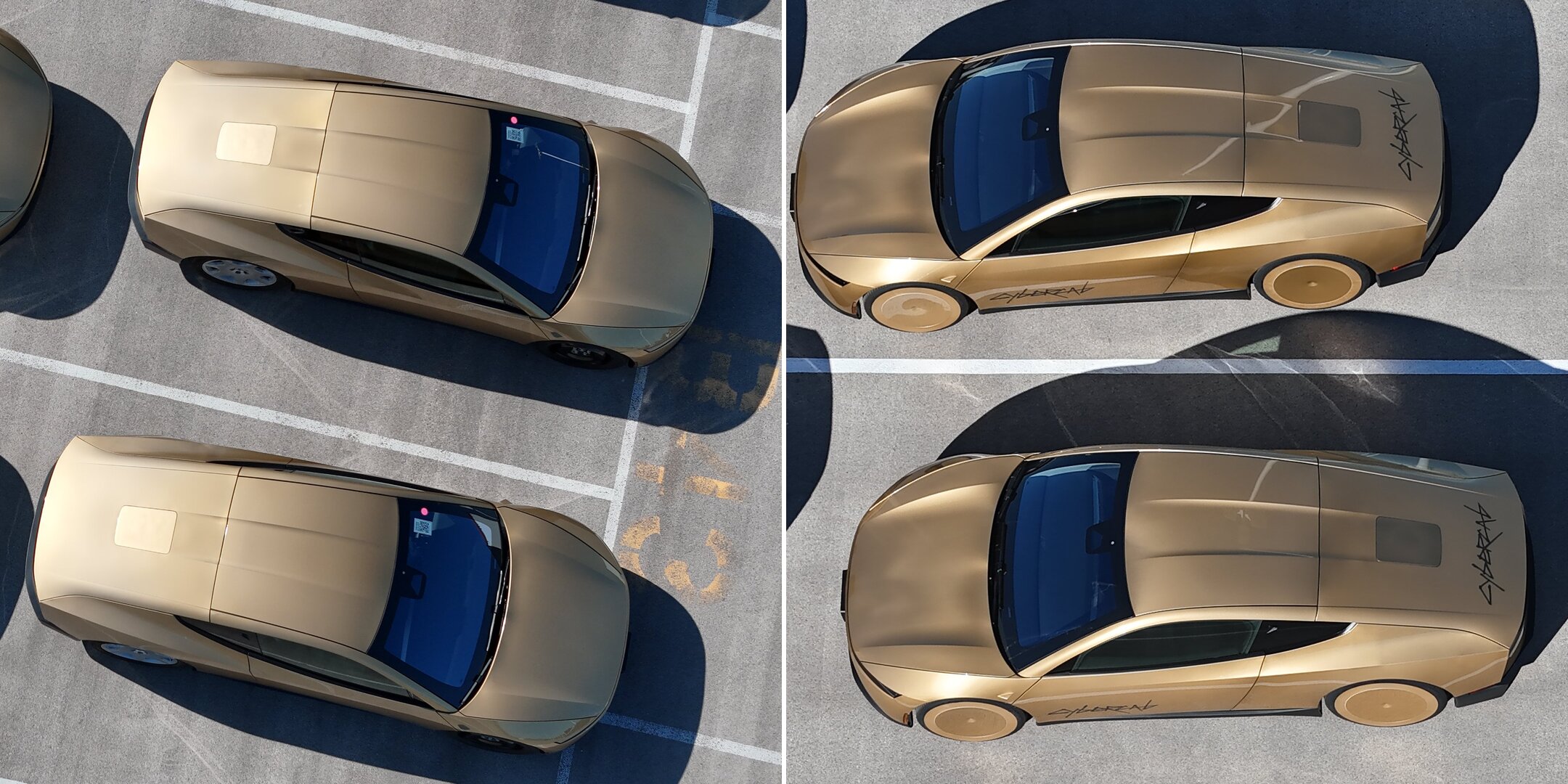
Aerial images captured by drone photographer Joe Tegtmeyer at Giga Texas on November 18 reveal a noticeable update to the appearance of Tesla’s Cybercabs equipped with Starlink. Rows of gold production vehicles sit in the outbound lot, each carrying a flush-mounted Starlink V5 terminal on the rear hatch that looks more refined than the version first shown months earlier.
When Tesla first unveiled the integration in July and displayed a physical example in August, the Starlink hardware appeared as a relatively distinct rectangular panel on the hatch. Later September footage of large numbers of Cybercabs leaving the factory still showed a lighter, more obvious rectangular cover that roughly matched the vehicle’s gold paint:
Images via Joe Tegtmeyer
The newest batch stands out for how cleanly the cover blends into the roof’s character lines. Observers and replies to Tegtmeyer’s post describe the result as tighter and more intentional, sitting flush and following the body contours rather than reading as an added panel.
All of the Cybercabs in the latest images also wear prominent “Cybercab” logos on the doors and rear hatch, confirming these are finished production units rather than early prototypes. They are staged near the factory building, end-of-line areas, and covered transport trailers, with some already lined up for shipment.
The scale and consistency of the installation point to factory tooling rather than retrofit work.
A secondary detail noted in related sightings is a darker tone to the Starlink cover compared with earlier lighter panels. Tegtmeyer himself left open whether the darker finish is deliberate. There are a variety of explanations for it: perhaps for thermal performance, signal characteristics, or simple visual identification—or simply a batch variation still being refined.
Either way, the overall effect is a more integrated, production-ready appearance. For a Robotaxi that relies on Starlink for fleet connectivity, passenger services, and backup data links in areas with weak cellular coverage, the cleaner hatch design is more than cosmetic.
It signals that Tesla is polishing the final visual and hardware details as Cybercab volumes continue to climb at Giga Texas ahead of broader Robotaxi deployment. The vehicles now look to be built with Starlink instead of it being added afterward.
The post Tesla gears up Cybercab with Starlink for public debut, but with notable changes appeared first on TESLARATI.