
The first Tesla Cybercab rolled off of production lines at Gigafactory Texas yesterday, and it is more than just a simple manufacturing milestone for the company — it’s the opening salvo in a profound economic transformation.
Priced at under $30,000 with volume production slated for April, the steering-wheel-free, pedal-less Robotaxi-geared vehicle promises to make personal car ownership optional for many, slashing transportation costs to as little as $0.20 per mile through shared fleets and high utilization.
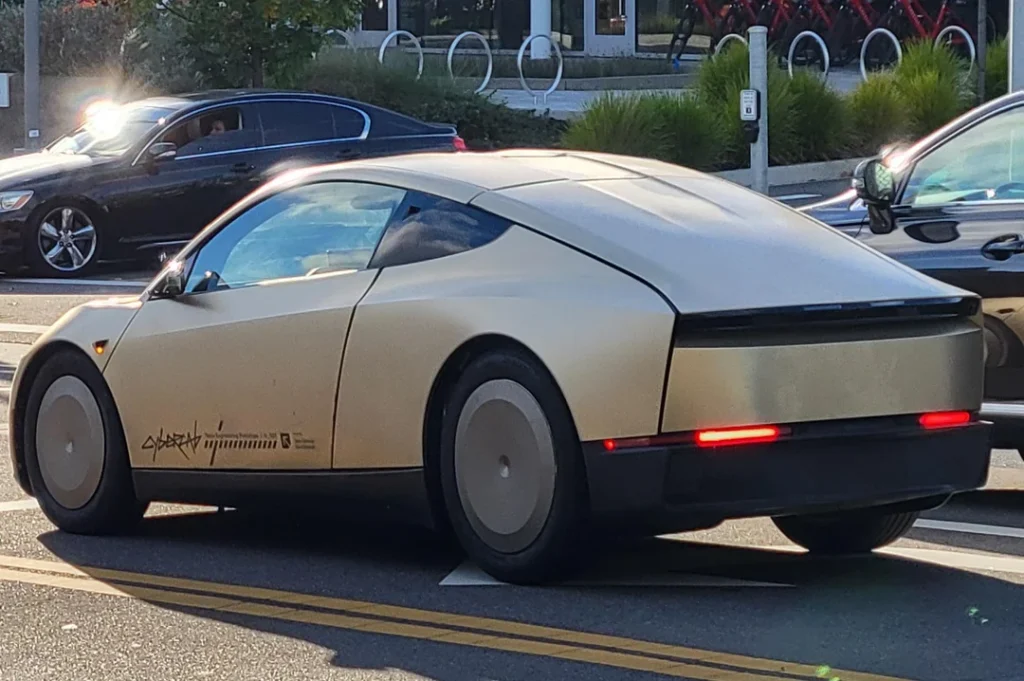
Credit: wudapig/Reddit< /a>
While this could unlock unprecedented mobility abundance — cheaper rides, reduced congestion, freed-up urban space, and massive environmental gains — it risks massive job displacement in ride-hailing, taxi services, and related sectors, forcing society to confront whether the benefits of AI-driven autonomy will outweigh the human costs.
Let’s examine the positives and negatives of what the Cybercab could mean for passenger transportation and vehicle ownership as we know it.
The Promise – A Radical Shift in Transportation Economics
Tesla has geared every portion of the Cybercab to be cheaper and more efficient. Even its design — a compact, two-seater, optimized for fleets and ride-sharing, the development of inductive charging, around 300 miles of range on a small battery, half the parts of the Model 3, and revolutionary “unboxed” manufacturing — is all geared toward rapid production.
Operating at a fraction of what today’s rideshare prices are, the Cybercab enables on-demand autonomy for a variety of people in a variety of situations.
Tesla ups Robotaxi fare price to another comical figure with service area expansion
It could also be the way people escape expensive and risky car ownership. Buying a vehicle requires expensive monthly commitments, including insurance and a payment if financed. It also immediately depreciates.
However, Cybercab could unlock potential profitability for owning a car by adding it to the Robotaxi network, enabling passive income. Cities could have parking lots repurposed into parks or housing, and emissions would drop as shared electric vehicles would outnumber gas cars (in time).
The first step of Tesla’s massive production efforts for the Cybercab could lead to millions of units annually, turning transportation into a utility like electricity — always available, cheap, and safe.
The Dark Side – Job Losses and Industry Upheaval
With Robotaxi and Cybercab, they present the same negatives as broadening AI — there’s a direct threat to the economy.
Uber, Lyft, and traditional taxis will rely on human drivers. Robotaxi will eliminate that labor cost, potentially displacing millions of jobs globally. In the U.S. alone, ride-hailing accounts for billions of miles of travel each year.
There are also potential ripple effects, as suppliers, mechanics, insurance adjusters, and even public transit could see reduced demand as shared autonomy grows. Past automation waves show job creation lags behind destruction, especially for lower-skilled workers.
Gig workers, like those who are seeking flexible income, face the brunt of this. Displaced drivers may struggle to retrain amid broader AI job shifts, as 2025 estimates bring between 50,000 and 300,000 layoffs tied to artificial intelligence.
It could also bring major changes to the overall competitive landscape. While Waymo and Uber have partnered, Tesla’s scale and lower costs could trigger a price war, squeezing incumbents and accelerating consolidation.
Balancing Act – Who Wins and Who Loses
There are two sides to this story, as there are with every other one.
The winners are consumers, Tesla investors, cities, and the environment. Consumers will see lower costs and safer mobility, while potentially alleviating themselves of awkward small talk in ride-sharing applications, a bigger complaint than one might think.
Elon Musk confirms Tesla Cybercab pricing and consumer release date
Tesla investors will be obvious winners, as the launch of self-driving rideshare programs on the company’s behalf will likely swell the company’s valuation and increase its share price.
Cities will have less traffic and parking needs, giving more room for housing or retail needs. Meanwhile, the environment will benefit from fewer tailpipes and more efficient fleets.
A Call for Thoughtful Transition
The Cybercab’s production debut forces us to weigh innovation against equity.
If Tesla delivers on its timeline and autonomy proves reliable, it could herald an era of abundant, affordable mobility that redefines urban life. But without proactive policies — retraining, safety nets, phased deployment — this revolution risks widening inequality and leaving millions behind.
Elon on the MKBHD bet, stating “Yes” to the question of whether Tesla would sell a Cybercab for $30k or less to a customer before 2027 https://t.co/sfTwSDXLUN
— TESLARATI (@Teslarati) February 17, 2026
The real question isn’t whether the Cybercab will disrupt — it’s already starting — it’s whether society is prepared for the economic earthquake it unleashes.
The post Tesla Cybercab production begins: The end of car ownership as we know it? appeared first on TESLARATI.