
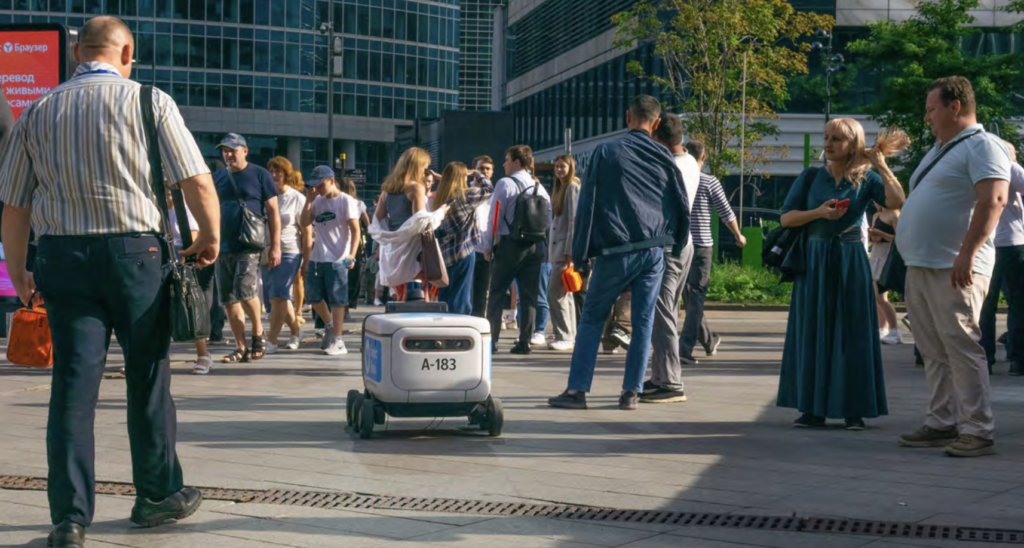
Robots are no longer confined to warehouses and factory floors. Robots are showing up on sidewalks, in airports, inside hospitals, and across city centers. From delivery robots to robotaxis, public-facing robots are moving from pilot programs to real-world deployments.
But as adoption accelerates, a bigger question is emerging: are we actually ready for robots in public spaces?
This report from ASTM International, MassRobotics, NIST, and the Urban Robotics Foundation explores the growing gap between what robots can do and the systems needed to support them in shared human environments. It looks beyond the technology itself to examine the real-world challenges shaping deployment, including safety, accountability, public trust, and the lack of consistent rules.
Today, companies are navigating a fragmented landscape. Regulations vary by city. Responsibilities are often unclear. And expectations around how robots should behave in public spaces are still evolving. That creates friction not just for robotics developers, but for municipalities, businesses, and the public.
What’s at stake isn’t just operational success, it’s whether public-facing robots can scale at all. This report breaks down:
- Where robots are already operating in public today
- The key risks and failure points in shared spaces
- Why governance, not technology, may be the biggest barrier to growth
- What a practical framework for public-space robotics could look like
Fill out the form below to access the report for free.
The post Setting the rules for robots in public spaces appeared first on The Robot Report.