
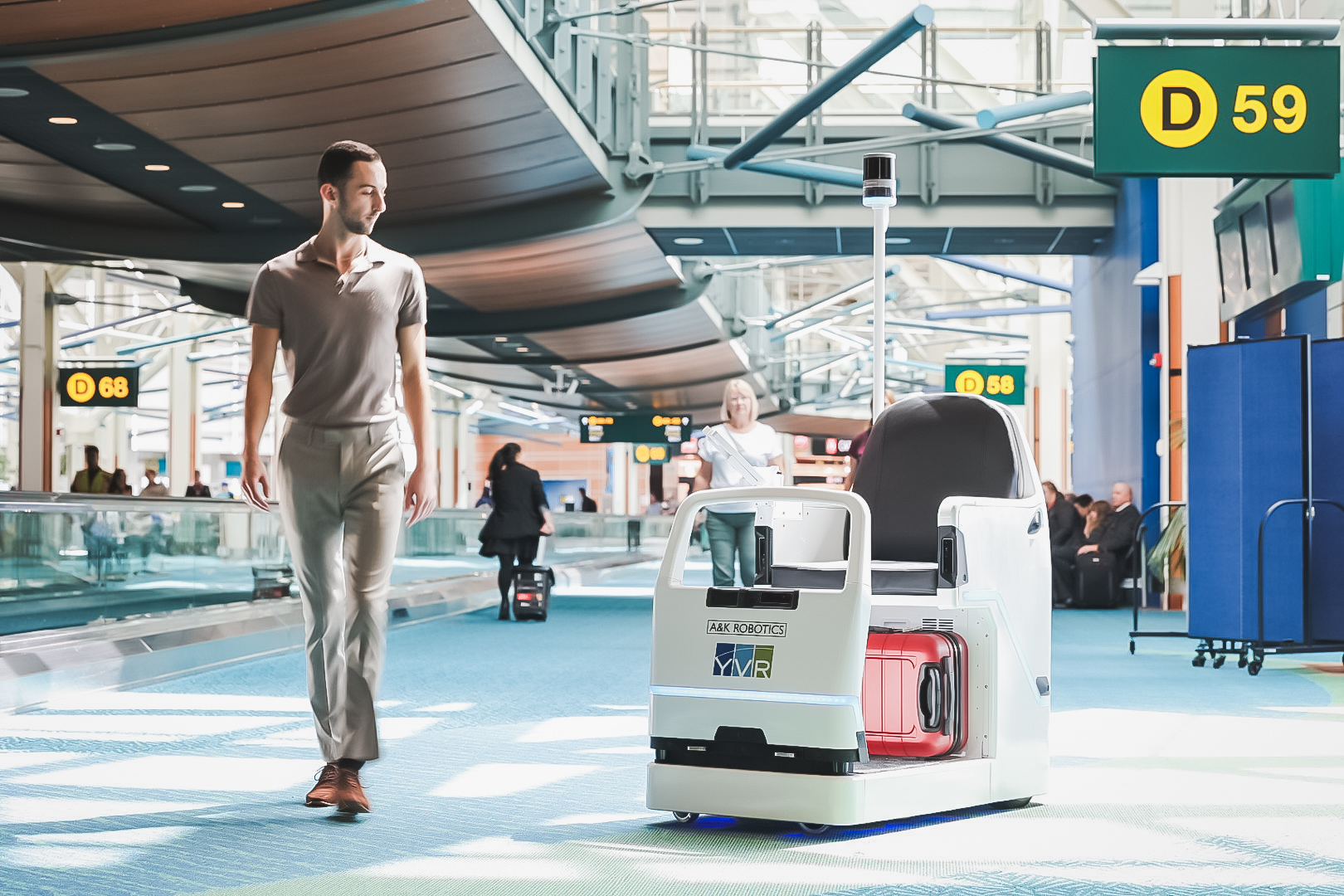
Cruz by A&K Robotics: an autonomous, self-driving robot providing safe, accessible passenger mobility in busy airport terminals.| Credit A&K Robotics
A&K Robotics has secured $8 million in Series A funding to scale the deployment of its autonomous passenger pods, aiming to solve a growing accessibility crisis in global aviation. The investment, led by BDC Capital and Vantage Futures, will accelerate the rollout of Cruz, a self-driving robot designed to navigate high-traffic airport terminals and provide independent mobility for the millions of travelers facing physical limitations.
Navigating airports can be a stressful experience for anyone, but it is particularly difficult for people with mobility limitations. Roughly 17% of the global population lives with mobility challenges, and requests for airport assistance are increasing 10–15% each year, outpacing passenger growth.
A&K hopes to introduce a new category of autonomous passenger mobility infrastructure to address this issue. The company’s latest round was led by BDC’s Industrial Innovation Venture Fund, part of BDC Capital, one of Canada’s largest and most active venture capital investors, and Vantage Futures, the corporate venture arm of airport and transportation leader Vantage Group.

Defining the future of airport mobility
A&K Robotics is building autonomous mobility for airports—self-driving vehicles designed to move passengers through complex indoor environments. As airports face increasing passenger volumes, labor constraints, and growing accessibility requirements, the company is working closely with leading operators to integrate autonomous mobility into everyday operations.
Cruz is a self-driving mobility robot that carries passengers through high-traffic, dynamic environments such as airport terminals. The robot works like a self-driving vehicle purpose-built for indoors. Riders select a destination, and Cruz navigates autonomously using onboard sensors and advanced AI. It dynamically adjusts its path to move safely alongside pedestrians and arrive precisely at the intended location. Cruz operates continuously, enabling airports to deliver consistent, accessible passenger mobility at scale.
“Air travel is chaotic enough—getting to your gate shouldn’t be part of the problem,” said Matthew Anderson, CEO of A&K Robotics. “We’re building the infrastructure that helps airports move more people, more safely, and with greater independence; all while fitting seamlessly into existing operations.”
Cruz is already deployed in complex, real-world airport environments, working with leading airport operators across North America and Europe, including Vancouver International Airport (YVR). YVR has the distinction of being named Best Airport in North America 15 times and ranked Top 10 globally by aviation research firm Skytrax. Another notable client is Madrid- Barajas Airport (MAD), operated by Aena, the world’s largest airport operator by passenger numbers, serving more than 380 million travelers annually.
The post Cruz’ing through the terminal: A&K Robotics lands $8M for autonomous mobility appeared first on The Robot Report.