
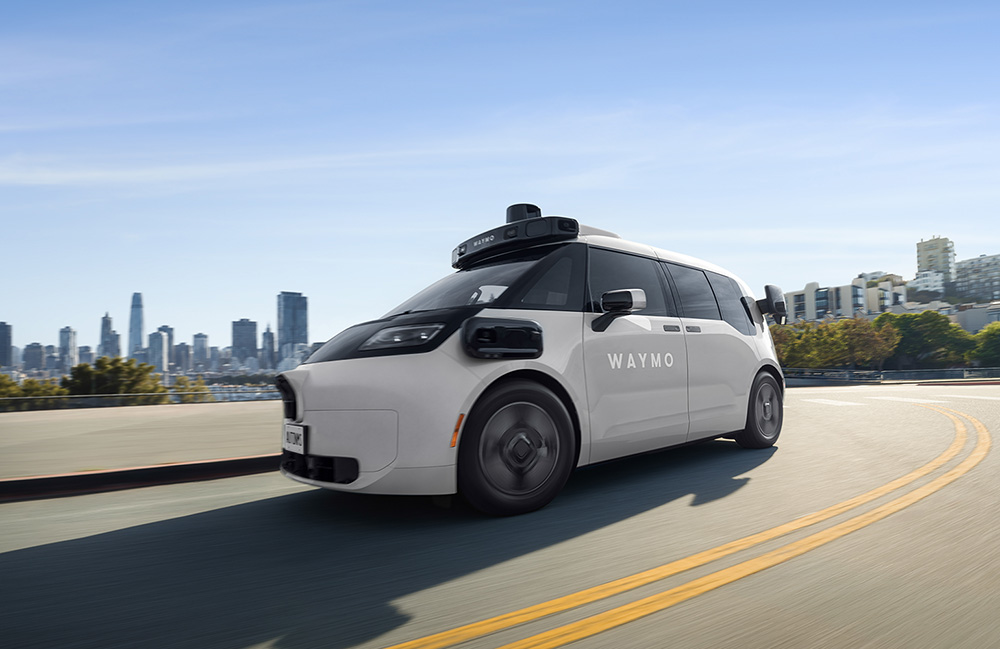
Waymo said the DMV order only applies to freeways and will not affect its operations on city streets. | Source: Waymo
The California Department of Motor Vehicles has barred Waymo autonomous vehicles (AVs) from operating on the state’s freeways. The DMV issued the order on Nov. 11, following a number of incidents in the state, it confirmed to The Robot Report.
Waymo said it will restrict freeway operations across all of its operating areas, as part of its safety-first approach.
The ban comes “following an incident in which three Waymo autonomous vehicles entered an active construction closure on U.S. Route 101 near Burlingame and another incident involving CHP vehicles on Highway 280 in San Francisco,” the DMV said. In the second incident, a Waymo vehicle can be seen attempting to drive past California Highway Patrol officers while they’re conducting a traffic stop. You can watch the incidents below.
The DMV determined that Waymo’s freeway operations “pose an imminent hazard to public safety due to recurring incursions by its vehicles into active construction zones where construction workers, vehicles and equipment are present.” The action prevents Waymo from operating or testing its driverless vehicles on all California freeways.
The restrictions will remain in place until Waymo demonstrates to the DMV that it has “taken effective corrective actions to address the deficiencies that precipitated the restrictions.” This includes providing evidence that its AVs can safely detect and respond to construction zones, emergency vehicles, and other roadway situations within the vehicles’ operational design domain.
“Safety is at the foundation of everything we do. Following recent freeway construction zone encounters on U.S. 101 in California that did not involve any injuries or collisions, the California DMV has implemented an operating restriction on freeway operations in the state. In alignment with our safety-first principles, we have also temporarily restricted freeway operations across our other operating markets to evaluate our performance. Our ride-hailing service continues to operate safely on surface streets, serving over half a million trips each week. We are working with the California DMV and other state officials diligently and responsibly to resume freeway operations,” a Waymo spokesperson told The Robot Report.
Waymo AVs struggle with construction zones
This isn’t Waymo’s first time running into issues with the California DMV this year. The DMV noted that Waymo AVs still posed a safety threat “despite a prior restriction and corrective actions implemented following similar incidents that occurred on May 18, 2026.”
The incidents the DMV is referring to occurred when seven Waymo vehicles drove between construction cones and into closed lanes in San Francisco. This incident resulted in Waymo issuing a safety recall with the National Highway Traffic Safety Administration (NHTSA) in June.
In the recall report, Waymo said that “under certain circumstances, the AV may enter and drive at speed in freeway construction zones due to inappropriately prioritizing the avoidance of other freeway hazards and/or failing to recognize the construction zone.” The recall was supposed to enhance Waymo AVs’ performance in and around freeway construction zones.
Waymo said it plans to continue freeway testing with trained autonomous specialists in the vehicles. It noted that its vehicles had been driving fully autonomously on California freeways for several years and began offering public riders trips using freeways last November.
Emergency vehicles, stopped school buses, and now construction zones have been some of the biggest challenges for Waymo since it began rolling out its robotaxis in 2018. Waymo now operates commercial services in over 15 cities in the U.S., including Austin, Las Vegas, and Atlanta. It has plans to expand to 17 more cities, including in London and Tokyo, in the coming years.
Waymo vehicles and hit-and-runs in Arizona
The robotaxis have also been involved in a growing number of hit-and-run incidents in Arizona, according to a local CBS channel.
Almost half of all police-reported crashes involving Waymo robotaxis in the Phoenix metro area end with the human driver fleeing the scene—a hit-and-run rate per mile more than double that of the general public, according to a 10-month review of crash reports and body-camera footage.
 Submit your innovation now!
The post California DMV bars Waymo AVs from operating on the state’s freeways appeared first on The Robot Report.